Evidence-based health education

Supplement guide

USANA supplements, compared label by label.

Compare CellSentials, HealthPak, and six focused formulas by their Supplement Facts labels, see which third-party testing claims are independently verified, and keep the ingredient overlap and limits in view before you choose.

The products on this page are made by USANA.

A few of the products reviewed below. The storefront carries the full catalog.
67%
of product sales tied to products whose manufacturing, production, and quality control USANA reports operating in-house[1]
11
finished products in the current NSF/ANSI 173 official listing[2]
$10.7M
invested in research and development in 2025, according to USANA's sustainability reporting[3]

Start here

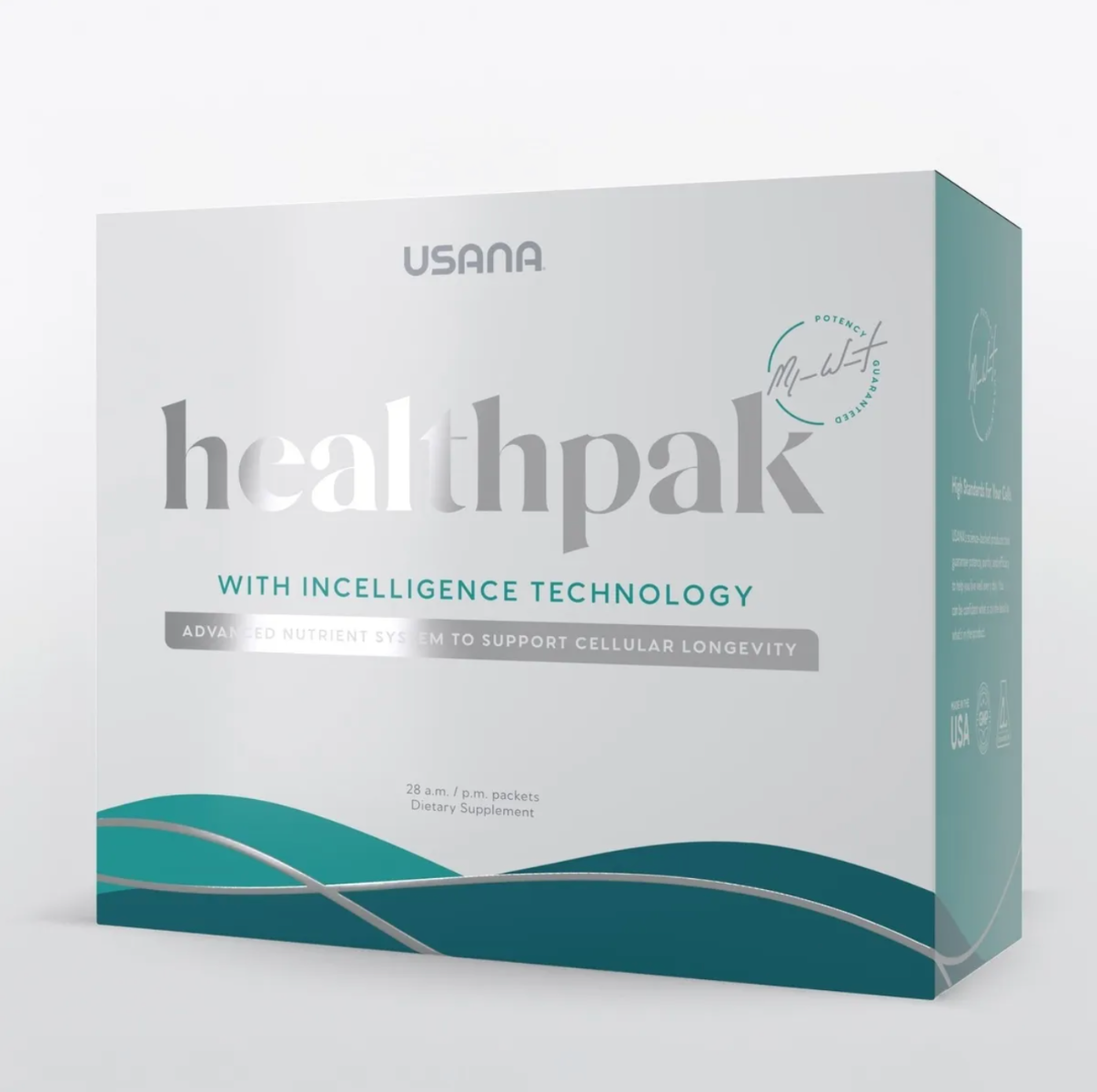
Each USANA product, with its Supplement Facts label.

The flagships come first, then the focused formulas that are easier to compare. Tap or click a card to flip between the product and its Supplement Facts label. The order is ours, not the manufacturer's.

Product selection criteria

  • Clear purpose in the catalog
  • Current formula information
  • Ingredient overlap between products
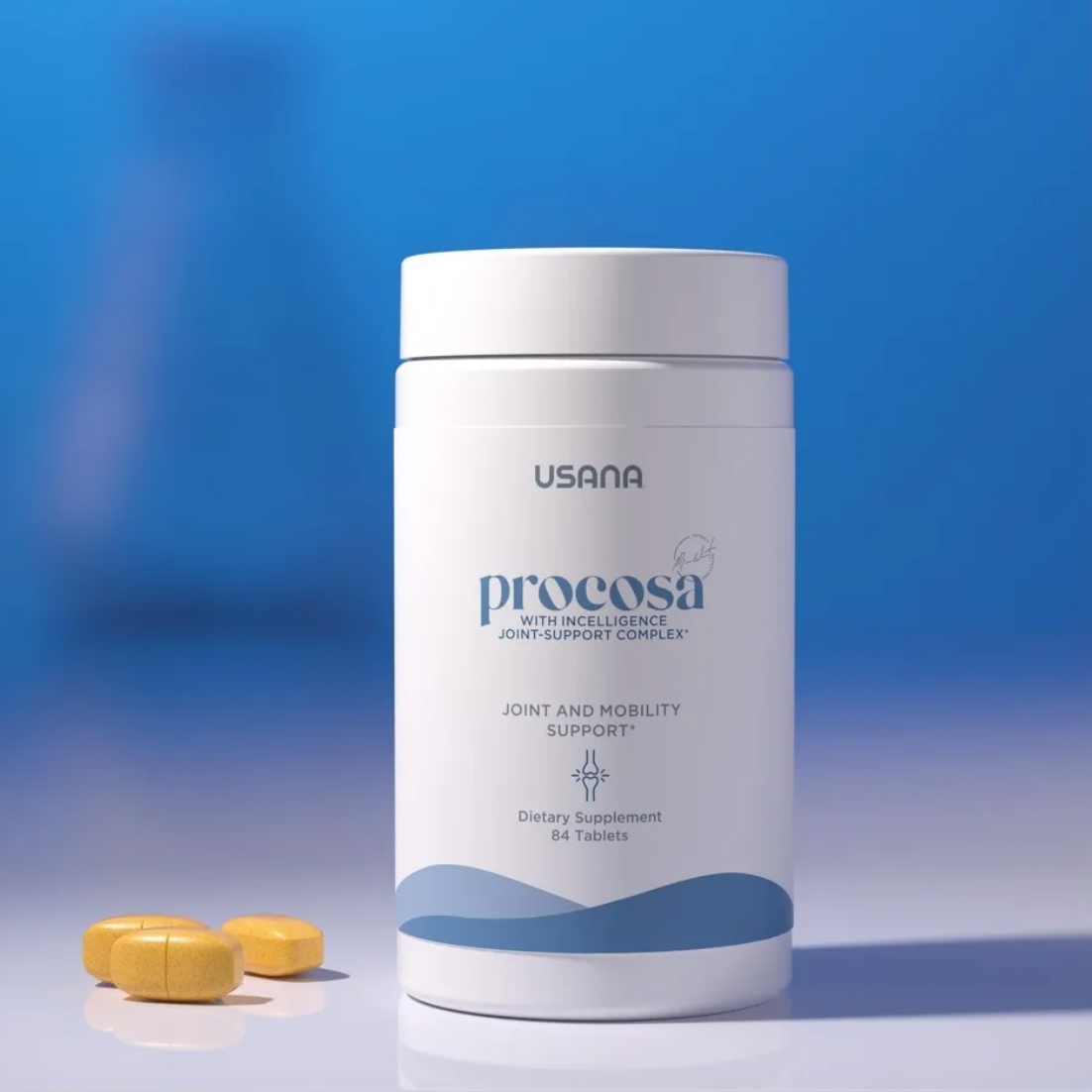
Procosa bottle

Focused formula

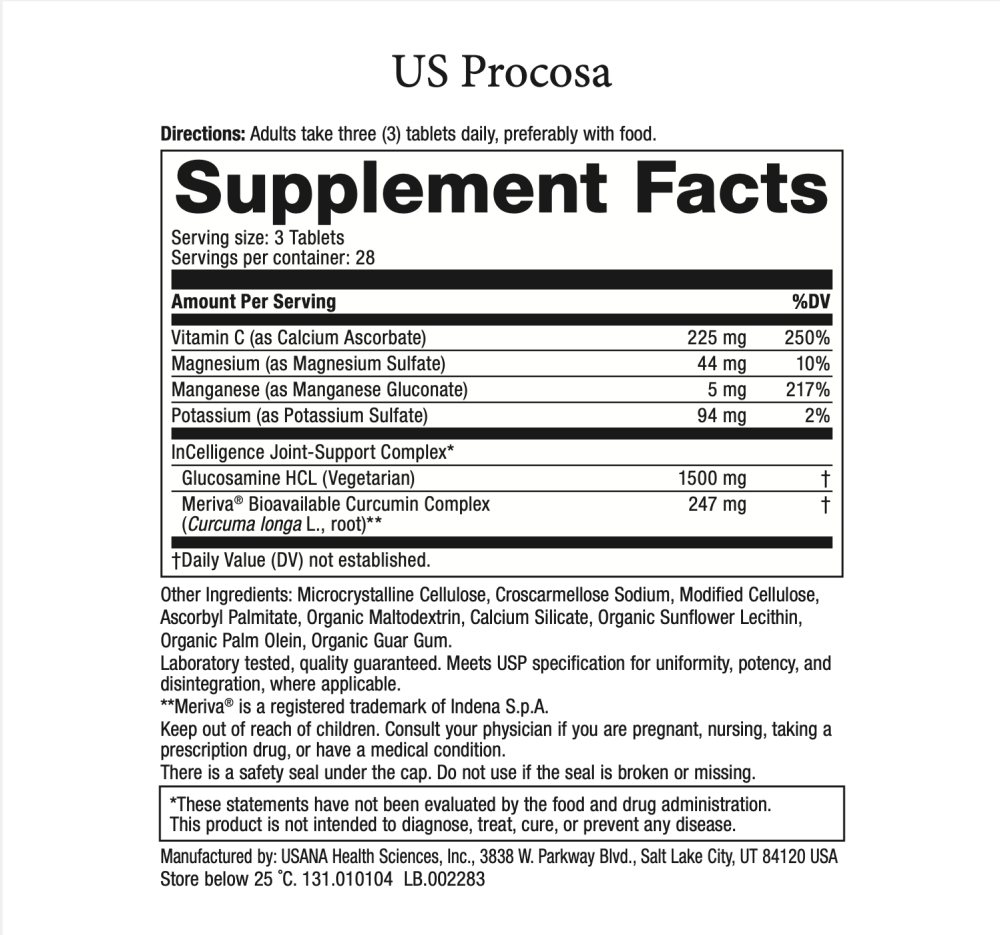
Procosa

A targeted combination built around vegetarian glucosamine, vitamin C, and curcumin. Read the exact serving and other ingredients before comparing it with single-ingredient options.[6]

Procosa: full label as text
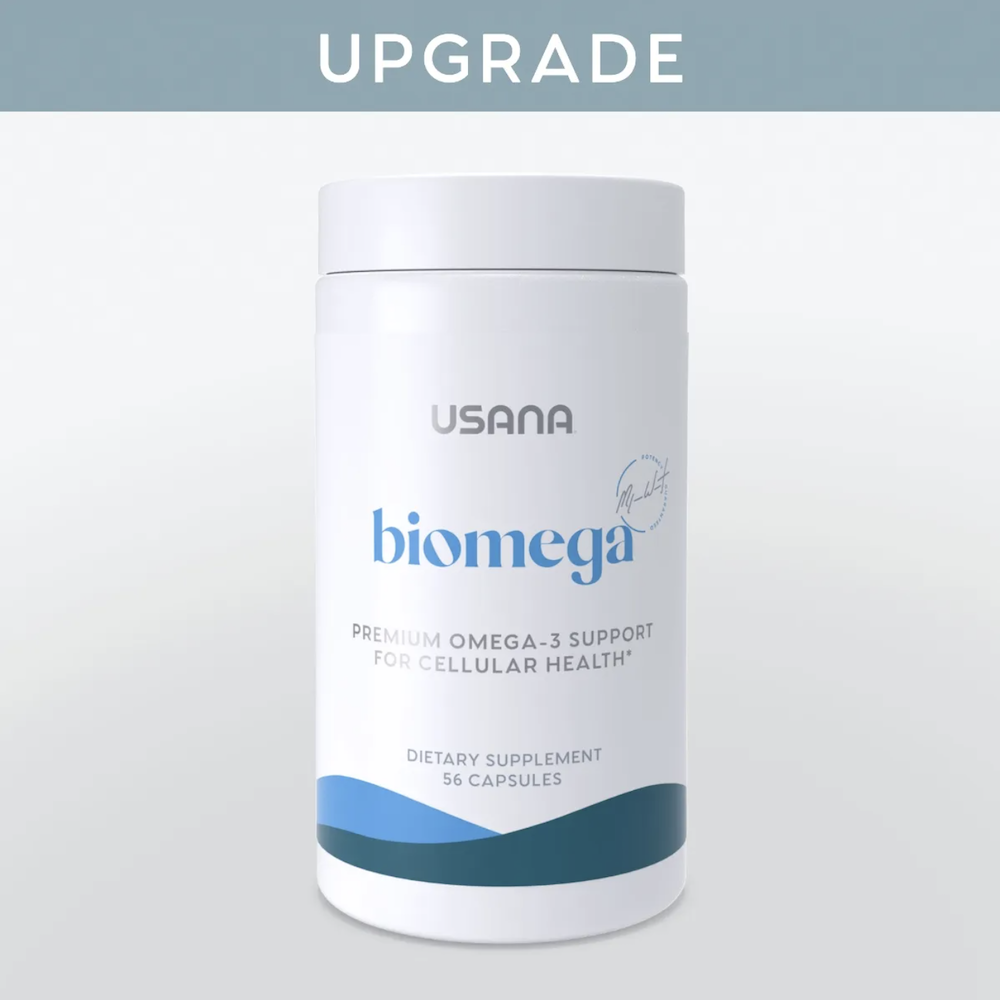
BiOmega bottle

Omega-3 format

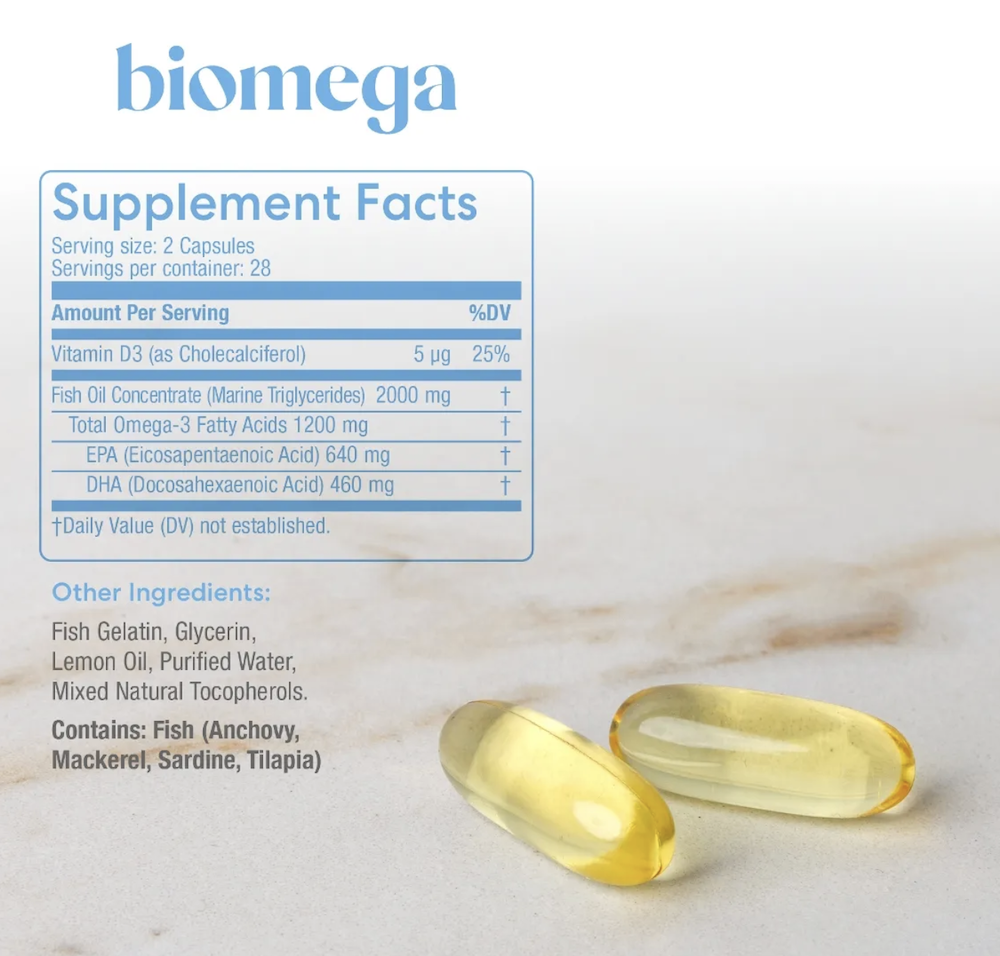
BiOmega

A fish-oil product providing concentrated omega-3 fatty acids plus vitamin D. It is also one of the finished products named in the current NSF listing, which applies to that product and scope.[2][6]

BiOmega: full label as text
MagneCal D bottle

Mineral combination

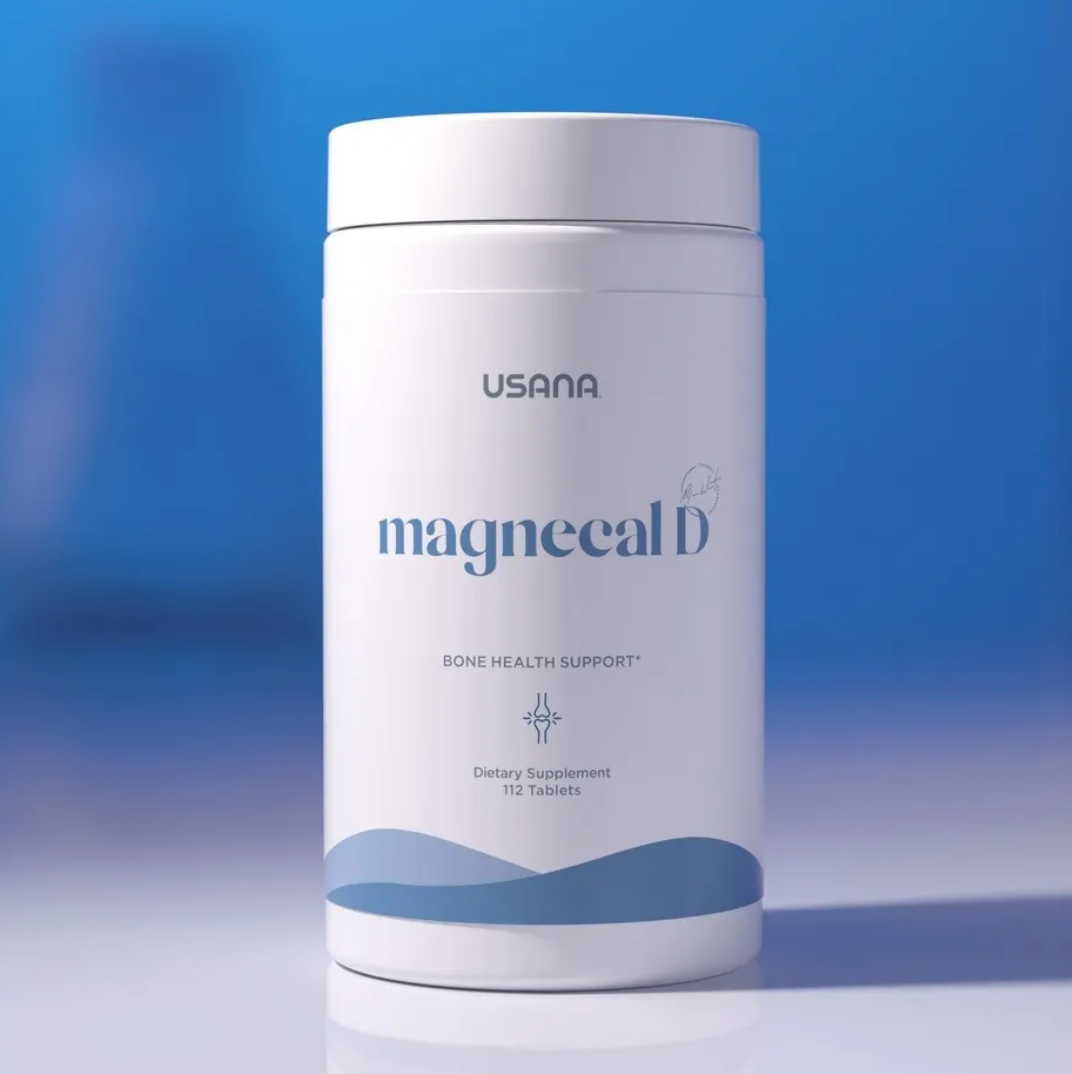
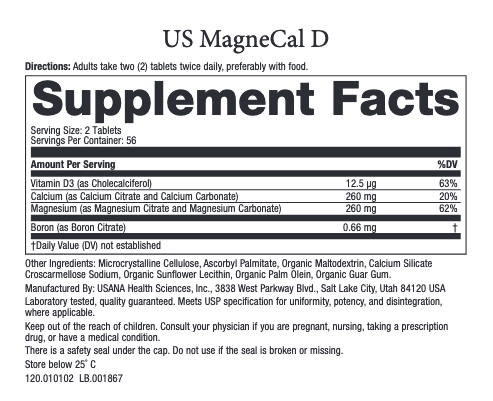
MagneCal D

Calcium, magnesium, vitamin D, and boron share one formula. USANA reports that ConsumerLab testing found the claimed amounts and checked purity, label accuracy, and disintegration.[7]

MagneCal D: full label as text
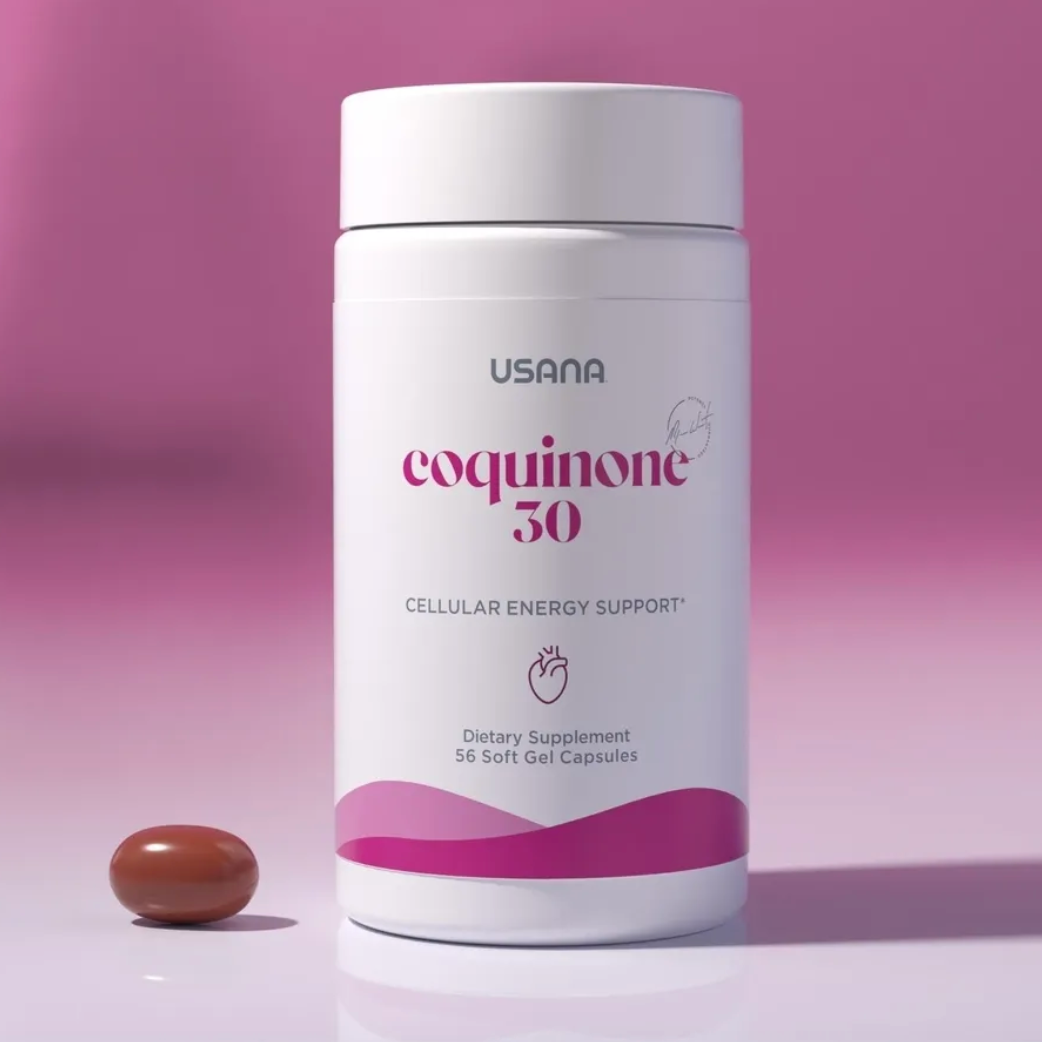
CoQuinone 30 bottle

Joy Health pick

CoQuinone

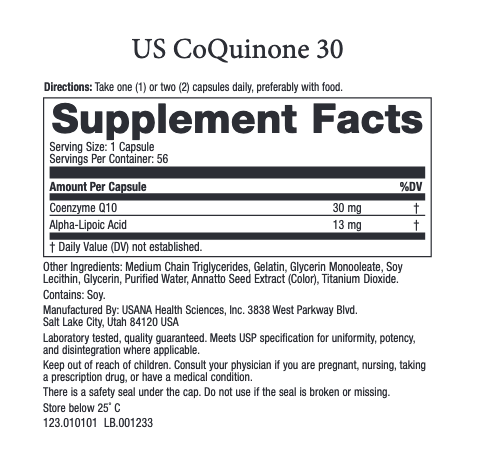
The U.S. CoQuinone 30 label is short: coenzyme Q10 and alpha-lipoic acid. It also identifies soy and gelatin, with no established Daily Value for either active ingredient.[8]

Its short label makes ingredient overlap and exclusions easier to spot.

CoQuinone: full label as text
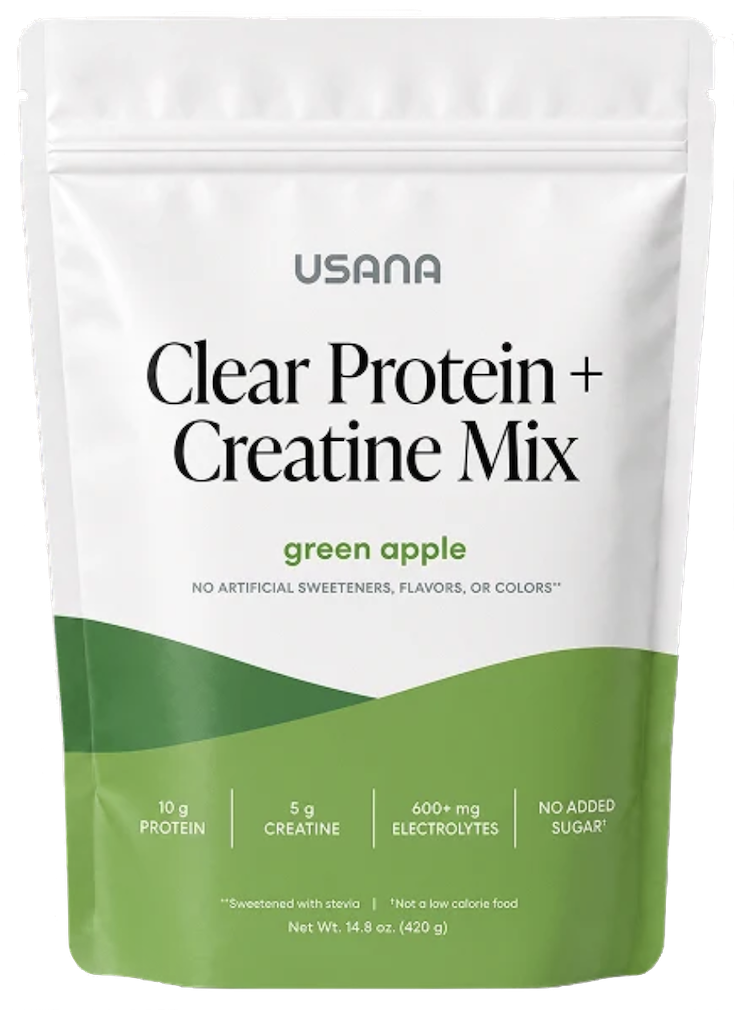
Clear Protein and Creatine green apple pouch

Joy Health pick

Clear Protein + Creatine

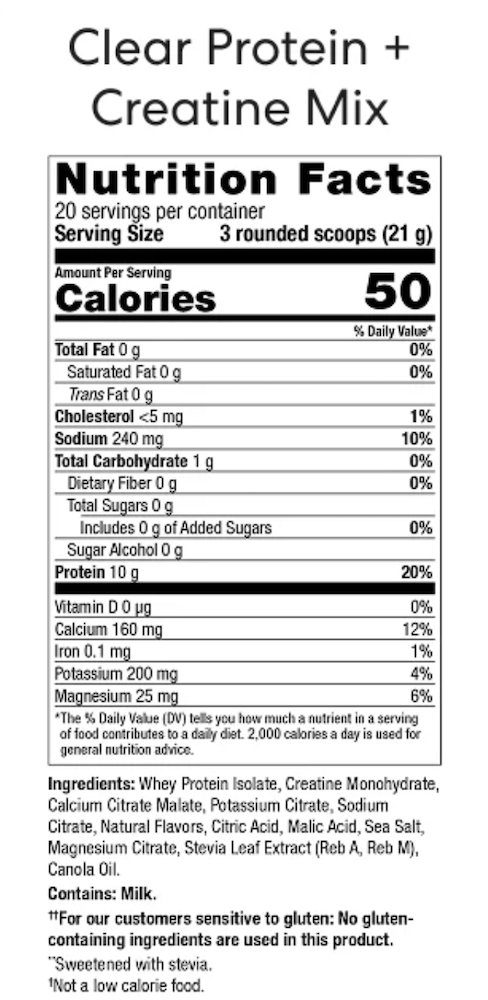
One 50-calorie serving combines 10 grams of clear whey protein isolate, 5 grams of creatine monohydrate, and more than 600 milligrams of electrolytes. It comes in Twisted Citrus and Green Apple, in bags or single-serve packets.[9]

It saves real shelf space when all three ingredients already belong in the routine.

Clear Protein + Creatine: full label as text
Core Aminos tub

Joy Health pick

Core Aminos

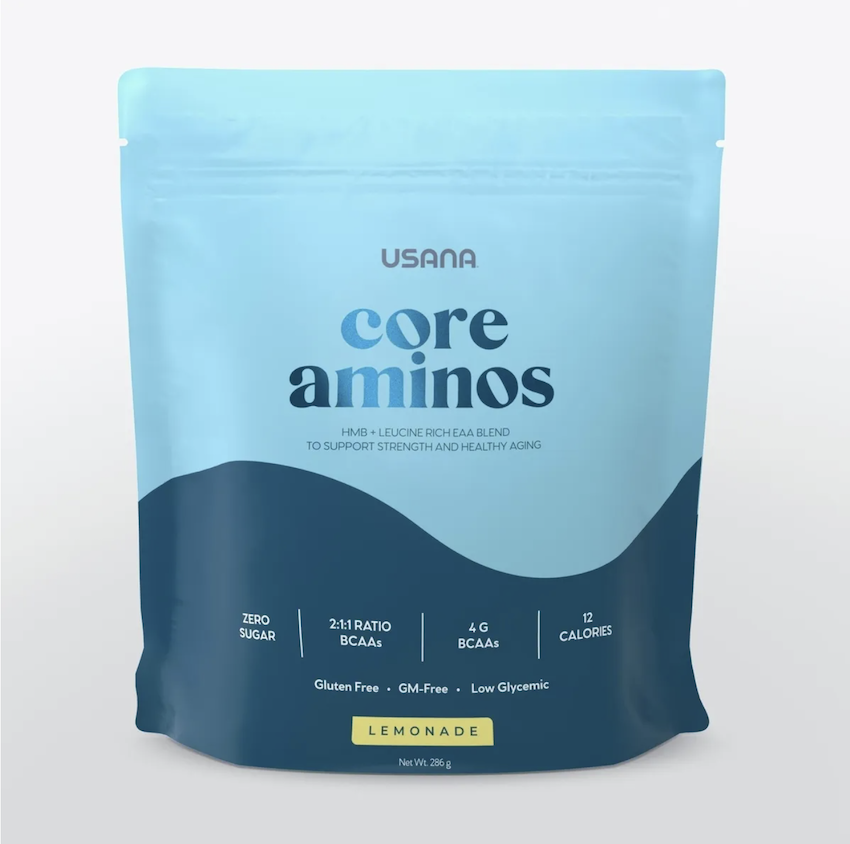
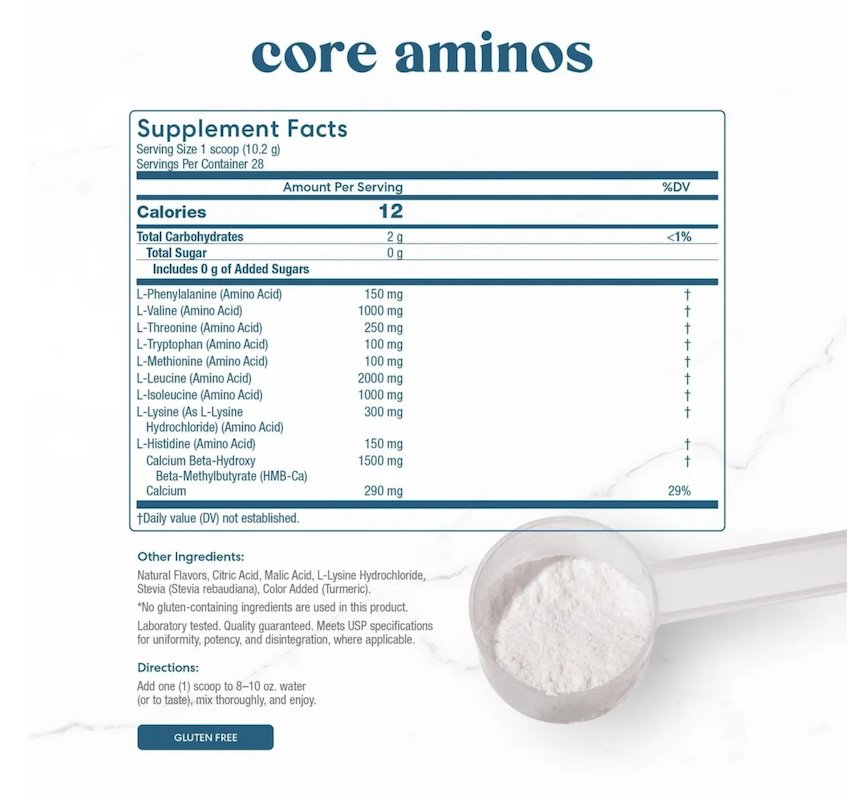
Core Aminos is a lemonade-flavored drink mix combining essential amino acids with HMB. USANA introduced it in 2025 as part of its active-nutrition expansion.[10]

Check whether both parts of the formula fit the intended routine, then compare the serving with simpler amino-acid products.

Core Aminos: full label as text

Start with the current label and avoid paying twice for overlapping ingredients.

See prices and current formulas

Stack builder

What does your daily stack add up to?

Several of these products repeat the same nutrients. Pick the ones you take or are considering to add them up against each adult Tolerable Upper Intake Level (UL), the highest daily intake likely to pose no risk of adverse effects for almost all healthy adults. A UL is not a target.[11] Other supplements, and food where a limit counts it, add to these totals; each meter says what its limit counts.

  • Label: 2 a day2 a day
  • Label: 2 a day
  • Label: 1 a day
  • Label: 1 a day
  • Label: 2 a day2 a day
  • Label: 1–2 a day
  • No daily amount on the label; counted per serving
  • No daily amount on the label; counted per serving

CellSentials + MagneCal D: 2 nutrients go above the adult upper limit. Magnesium 746 mg against 350 mg; niacin 40 mg against 35 mg.

  • Magnesium746 mg of 350 mg ULAbove the UL

    CellSentials 226 mg · MagneCal D 520 mg. UL counts: Supplements and medications only; magnesium in food is not counted.[12]
  • Niacin40 mg of 35 mg ULAbove the UL

    CellSentials 40 mg. UL counts: Supplemental niacin only, both forms; based on skin flushing.[13]
  • Vitamin D75 µg of 100 µg UL

    CellSentials 50 µg · MagneCal D 25 µg. UL counts: Daily intake; ODS notes that toxicity almost always comes from supplements.[14]
  • Folate600 µg of 1,000 µg UL

    CellSentials 600 µg. UL counts: Folic acid from supplements and fortified foods only.[15]
  • Vitamin C1,000 mg of 2,000 mg UL

    CellSentials 1,000 mg. UL counts: Food and supplements.[16]
  • Zinc20 mg of 40 mg UL

    CellSentials 20 mg. UL counts: Food and supplements.[17]
  • Selenium200 µg of 400 µg UL

    CellSentials 200 µg. UL counts: Food and supplements.[18]

Also in this stack, under half of their limits

  • Iodine
  • Vitamin A
  • Vitamin B6
  • Calcium
  • Boron
  • Copper
  • Manganese
  • Vitamin E
  • Choline
  • Molybdenum
  • Vanadium

Above an upper limit on its own

  • CellSentials, at its label directions: niacin comes to 40 mg a day, against a 35 mg limit (supplemental niacin only, both forms; based on skin flushing)[13].
  • HealthPak, at its label directions: magnesium comes to 486 mg a day, against a 350 mg limit (supplements and medications only; magnesium in food is not counted)[12]; niacin comes to 40 mg a day, against a 35 mg limit (supplemental niacin only, both forms; based on skin flushing)[13].
  • MagneCal D, at its label directions: magnesium comes to 520 mg a day, against a 350 mg limit (supplements and medications only; magnesium in food is not counted)[12].

What combining adds

  • CellSentials + HealthPak: HealthPak already repeats CellSentials' vitamins and minerals, so taking both counts that twice. Together, folate comes to 1,200 µg a day, against a 1,000 µg limit (folic acid from supplements and fortified foods only)[15]; vitamin D comes to 112 µg a day, against a 100 µg limit (daily intake; ODS notes that toxicity almost always comes from supplements)[14].
  • HealthPak + MagneCal D: HealthPak already repeats part of a MagneCal D serving, so taking both counts that twice.

Every other pair goes above a limit only where one of its products already does on its own.

Joy Health arithmetic from the label transcriptions checked , at each label's directions unless you change the servings. The same numbers are in the label data. General education, not medical advice.

Label overlap

Where the labels overlap, and the upper limits

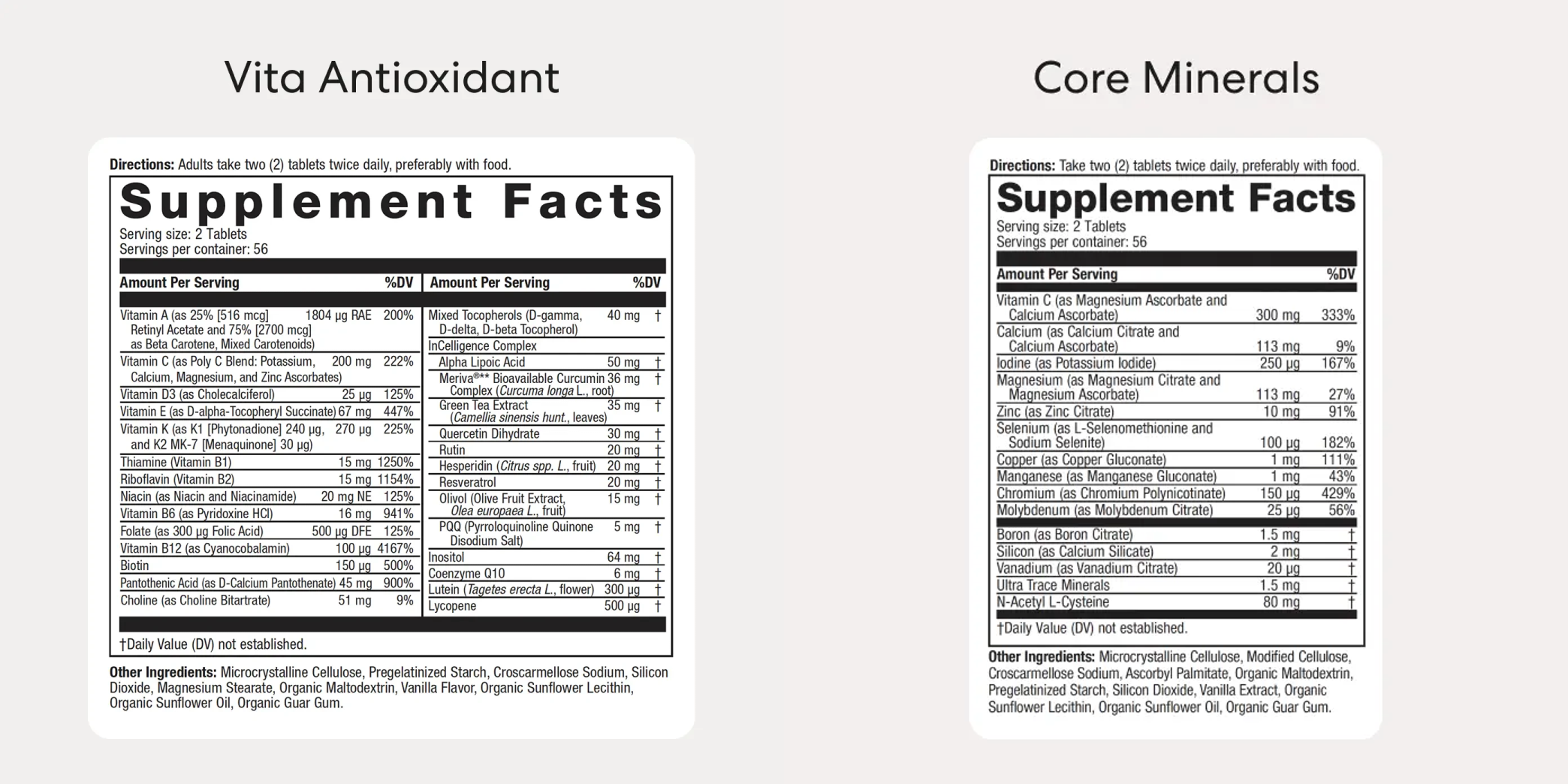
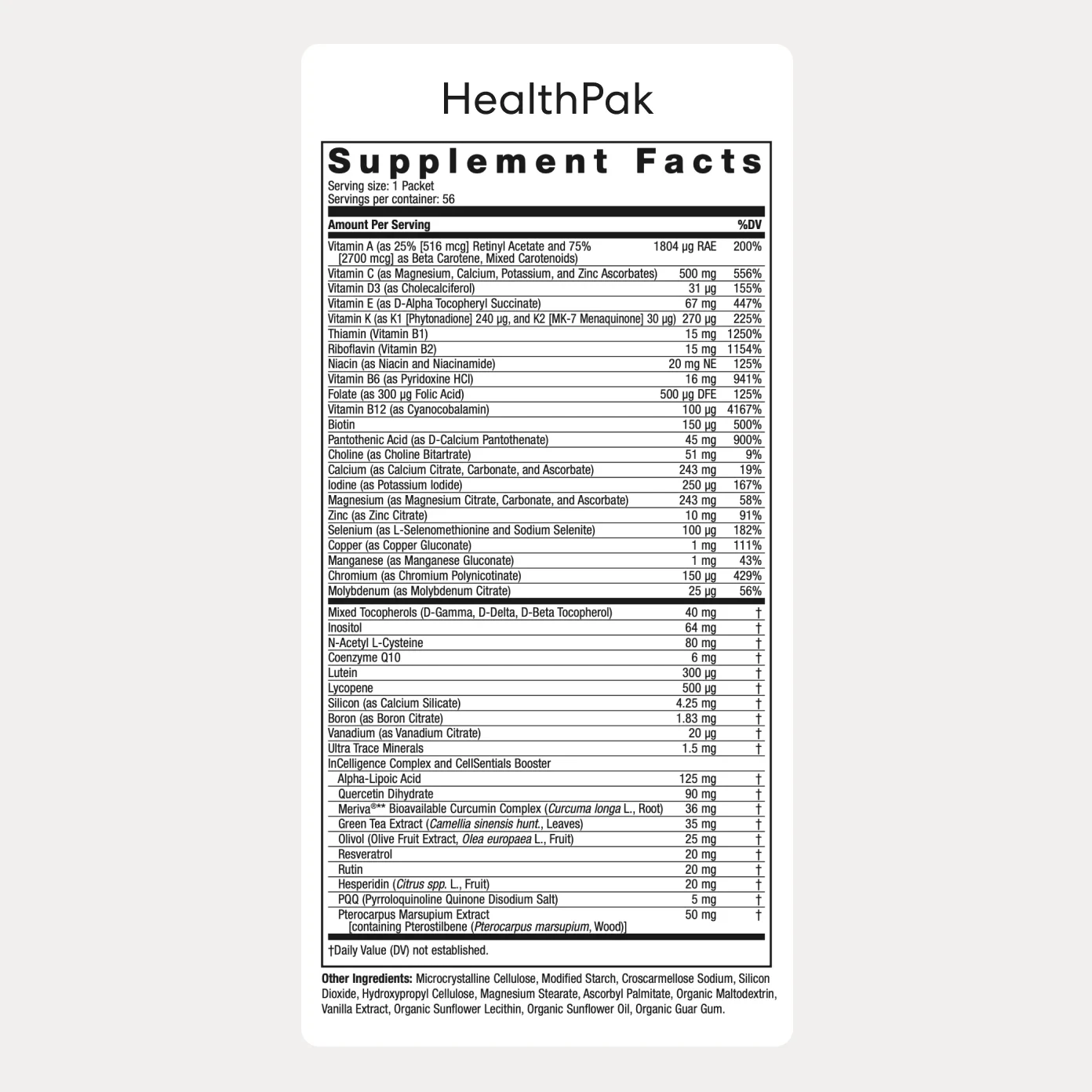
The table shows each product's daily amount at its label directions next to the adult UL, with what each limit counts and its source. HealthPak repeats CellSentials' vitamins and minerals, so read those two columns as alternatives rather than a stack.

Daily amounts at each label's directions, with adult upper limits. Products without a stated number of servings a day show one serving, marked “per serving.” A dash means the product does not contain the nutrient.
NutrientCellSentialsHealthPakProcosaBiOmegaMagneCal DClear Protein + Creatine MixCore AminosAdult UL
Vitamin C1,000 mg1,000 mg225 mg––––2,000 mg[16]Food and supplements
Vitamin D50 µg62 µg–5 µg25 µg––100 µg[14]Daily intake; ODS notes that toxicity almost always comes from supplements
Niacin40 mg NEAbove the UL40 mg NEAbove the UL–––––35 mg[13]Supplemental niacin only, both forms; based on skin flushing
Calcium226 mg486 mg––520 mg160 mg per serving290 mg per serving2,500 mg (2,000 mg from age 51)[19]Daily intake; food alone rarely reaches it
Magnesium226 mg486 mgAbove the UL44 mg–520 mgAbove the UL25 mg per serving–350 mg[12]Supplements and medications only; magnesium in food is not counted
Manganese2 mg2 mg5 mg––––11 mg[20]Food, water, and supplements
Boron3 mg3.66 mg––1.32 mg––20 mg[21]Daily intake

Food changes the picture differently for magnesium and niacin, the two nutrients that a product here goes above on its own. Most U.S. adults already get more niacin from food than recommended, while many get less magnesium than recommended, and neither upper limit counts what food provides.[12][13] Combinations add up even below the label directions: one serving each of CellSentials and MagneCal D comes to 373 mg of supplemental magnesium a day, above the 350 mg limit. Joy Health interpretation: label directions are the manufacturer's, not a minimum. One serving a day of CellSentials, HealthPak, or MagneCal D, each on its own, stays under both limits, which is a reasonable option for someone whose diet already covers much of what the supplement adds. Each product's page has its full label as text and what to check before taking it.

Download the label data

Every label row on the product pages, with the daily amounts and upper limits in this table, is available as JSON and CSV. The files are generated from the same transcription the pages use, checked , so they always match what the pages show. Amounts are as printed; the label discrepancies we found are described on each product page. The files are licensed CC BY 4.0: reuse them freely, crediting Joy Health with a link to this page.

Quality evidence

Is USANA third-party tested?

NSF's official listing names 11 finished products. That is individual product evidence, rather than a brand-wide conclusion. Manufacturing control and company investment answer different quality questions.

Manufacturing control

USANA says it conducts manufacturing, production, and quality control for roughly two-thirds of its nutritional products at its Salt Lake City facility. Keeping those operations in-house can make process ownership and corrective action more direct.[1]

Joy Health interpretation: In-house control can make accountability for production and corrective action more direct. It does not prove that every product is superior or appropriate for every person.

Finished-product verification

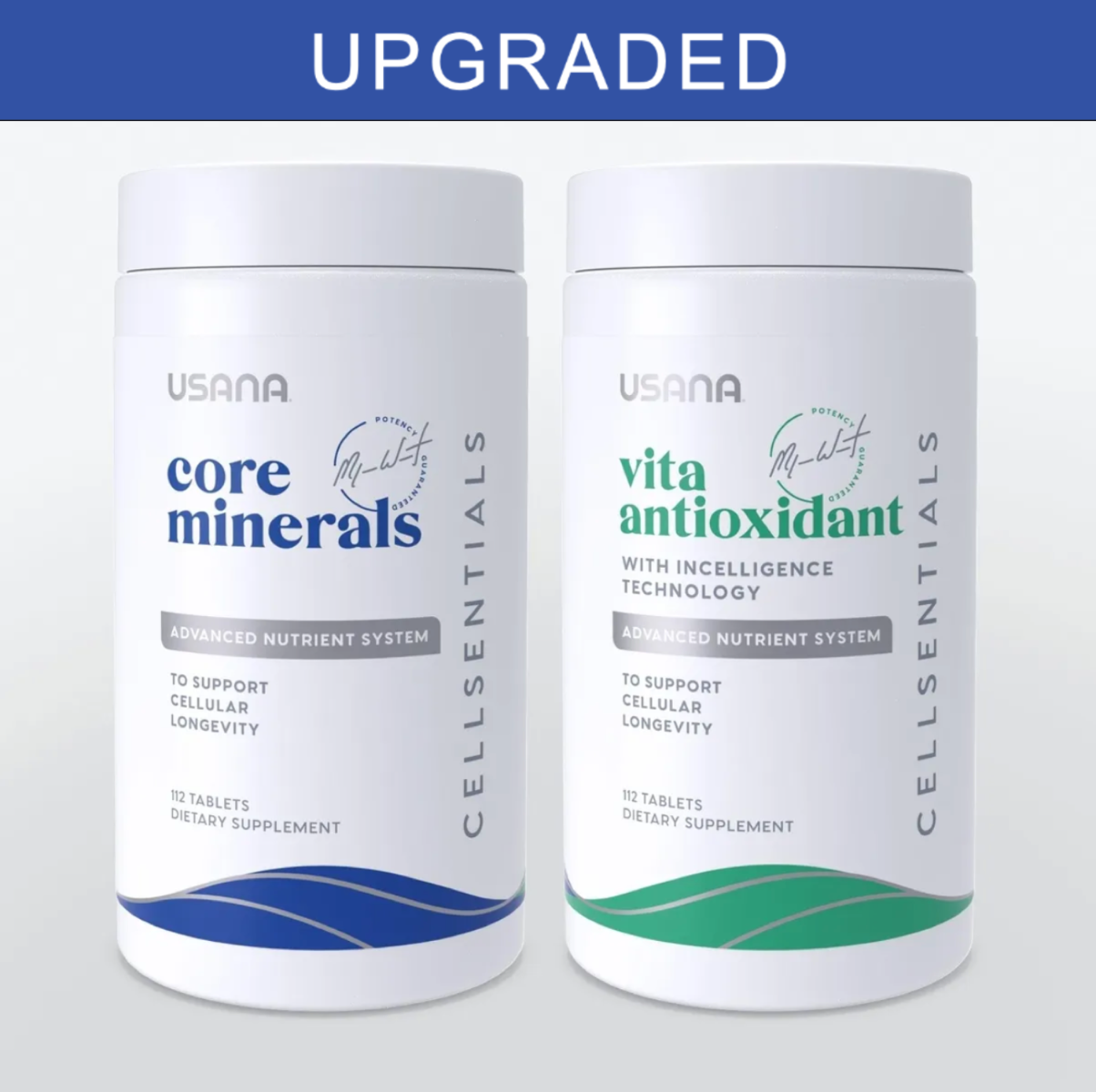
NSF's official listing identifies 11 USANA finished products under NSF/ANSI 173, including HealthPak, CellSentials Core Minerals, CellSentials Vita-Antioxidant, Procosa, BiOmega, and MagneCal D.[2]

Joy Health interpretation: A listing applies to the named products and certification scope. It should not be generalized to every item in the catalog.

Quality systems investment

USANA reports that every employee required to receive current good manufacturing practices training was current in 2025. The same report states that 15 new products launched that year.[3]

Joy Health interpretation: Training and launches indicate organizational activity. The figures are company-reported and do not establish a clinical outcome.

Recent changes

Recent formula changes and launches.

2025
major nutritionals refresh
2026
new active-nutrition formats
Current catalog
supplements, nutritionals, and skincare

USANA's 2025 reporting describes research spanning human nutrition, cellular biology, biochemistry, genetics, the microbiome, natural-product chemistry, and clinical research. Its stated work includes new products, reformulations, and adaptations for different regulatory markets.[1]

2025 formulation update

CellSentials was reformulated in 2025.

A company announcement records the addition of PQQ to the InCelligence Complex and the launch of Core Aminos and Circulate+ alongside other portfolio updates.[10]

The announcement confirms a new version of CellSentials. It does not prove the newer version improves health outcomes; that question depends on the ingredient, amount, and evidence for the intended use.

01 · Foundation

Four established products changed in 2025.

USANA's 2025 announcements named updates to CellSentials, HealthPak, BiOmega, and Proflavanol alongside launches including Core Aminos, Marine Collagen Peptides, and Circulate+.[10]

02 · New format

Clear Protein + Creatine Mix puts protein, creatine, and electrolytes in one glass.

The August 2026 launch combines 10 grams of clear whey protein, 5 grams of creatine monohydrate, and more than 600 milligrams of electrolytes per serving.[9]

03 · Ready to drink

Clear Protein Drink is ready-to-drink clear whey.

Each piña colada can contains 22 grams of clear whey protein isolate, zero sugar, and 90 calories. It is noncarbonated and sold in 12-packs.[22]

The button opens the manufacturer's storefront. Check the serving size, Supplement Facts, and specific ingredients before choosing.

See what is available now

Limits

Quality is not the same question as efficacy.

FDA requires dietary-supplement manufacturers to follow current good manufacturing practices, but it does not approve dietary supplements before marketing. FDA also advises discussing supplement use with a doctor, pharmacist, or other health professional because products can interact with medicines or other supplements.[23]

  • Verify the exact product and current label.

    Start online: confirm the product name, country or market, serving size, active amounts, other ingredients, allergens, directions, and warnings on the current product page.

    Check again in hand: compare those details with the package that arrives. Formulas and package sizes can change, and labels can differ between markets.

    This verifies which formula you are evaluating. It does not establish that the formula works for a particular purpose.

  • Match the ingredient, form, amount, and intended use to the evidence.

    Write down the comparison: exact ingredient, chemical form when relevant, daily amount, study population, duration, and measured outcome. A shared ingredient name is not enough when the amount or intended use differs.

    Prefer the closest match: give more weight to evidence that resembles the product and purpose you are assessing. Treat company announcements as formula records, not independent efficacy evidence.

    Use the supplement evidence guide for a fuller comparison method.

  • Keep personal safety and medication questions separate from brand quality.

    Prepare one complete list: include medicines, supplements, amounts, timing, allergies, and relevant health conditions. Bring the list and the current product label to a doctor or pharmacist before adding the product.

    Ask about the formula: brand reputation and manufacturing controls do not answer questions about interactions, ingredient overlap, or whether the product is appropriate for one person.

    The FDA recommends discussing supplement use with a health professional because medicines and supplements can interact.[23]

Sources

Sources we read.

Updated to add the stack builder and what the labels add up to, after the September 24, 2026 update that rechecked NSF's official listing and added the label overlap table. Other source read dates are stated below.

  1. USANA Health Sciences, Company Information

    Company-reported manufacturing share, R&D scope, scientific disciplines, and product-development approach. Read August 29 and re-read August 31, 2026.

  2. NSF Official Listings, USANA finished products under NSF/ANSI 173

    Independent listing record naming the facility, certification standard, finished products, and each product's recommended daily serving. Read August 29 and August 31, 2026, when it named 12 finished products, and re-read September 23, 2026, when it named 11; the counts on this page were corrected in the September 24, 2026 update.

  3. USANA Health Sciences, 2025 Sustainability Highlights

    Company-reported R&D investment, product launches, and GMP training completion. Read August 29, 2026.

  4. USANA Health Sciences, 2026 second-quarter filing

    Current company filing used for product-line mix, Essentials/CellSentials sales context, and company reporting. Read August 29, 2026.

  5. USANA Health Sciences, 2026 CellSentials ConsumerLab announcement

    Company announcement describing the reported testing scope and current formulation. ConsumerLab's underlying report was not available in the source reviewed here. Read August 29, 2026.

  6. Ask The Scientists, USANA product overview

    USANA-owned product reference used for the catalog roles and ingredient summaries for HealthPak, Procosa, and BiOmega. It is product information, not independent efficacy evidence. Read August 29, 2026.

  7. USANA Health Sciences, 2025 MagneCal D ConsumerLab announcement

    Company announcement describing ingredients and the reported purity, potency, label-accuracy, and disintegration checks. Read August 29, 2026.

  8. USANA, U.S. CoQuinone 30 Supplement Facts

    Product label used for active ingredients, other ingredients, allergens, and the absence of established Daily Values. Read August 29, 2026.

  9. USANA Health Sciences, 2026 Clear Protein + Creatine Mix announcement

    Company announcement used for the launch date, format, serving amounts, flavors, and manufacturing statement. It is not comparative clinical evidence. Read August 30, 2026.

  10. USANA Health Sciences, 2025 Nutritionals Portfolio Announcement

    Company announcement used for the Core Aminos format and ingredients, plus named formulation changes and launches. It is not independent efficacy evidence. Read August 30, 2026.

  11. Dietary Reference Intakes for Vitamin A, Vitamin K, Arsenic, Boron, Chromium, Copper, Iodine, Iron, Manganese, Molybdenum, Nickel, Silicon, Vanadium, and Zinc, Chapter 1

    Institute of Medicine (National Academies Press), 2001. Used for what a Tolerable Upper Intake Level means and that it is not a recommended intake. Read September 23, 2026.

  12. Magnesium: Fact Sheet for Health Professionals

    NIH Office of Dietary Supplements. Used for the supplemental magnesium upper limit and what it counts. Read September 23, 2026.

  13. Niacin: Fact Sheet for Health Professionals

    NIH Office of Dietary Supplements. Used for the niacin upper limit and its basis in skin flushing. Read September 23, 2026.

  14. Vitamin D: Fact Sheet for Health Professionals

    NIH Office of Dietary Supplements. Used for the adult upper limit and what it counts. Read September 23, 2026.

  15. Folate: Fact Sheet for Health Professionals

    NIH Office of Dietary Supplements. Used for the adult upper limit and what it counts. Read September 23, 2026.

  16. Vitamin C: Fact Sheet for Health Professionals

    NIH Office of Dietary Supplements. Used for the adult upper limit and what it counts. Read September 23, 2026.

  17. Zinc: Fact Sheet for Health Professionals

    NIH Office of Dietary Supplements. Used for the adult upper limit and what it counts. Read September 23, 2026.

  18. Selenium: Fact Sheet for Health Professionals

    NIH Office of Dietary Supplements. Used for the adult upper limit and what it counts. Read September 23, 2026.

  19. Calcium: Fact Sheet for Health Professionals

    NIH Office of Dietary Supplements. Used for the adult upper limit and what it counts. Read September 23, 2026.

  20. Manganese: Fact Sheet for Health Professionals

    NIH Office of Dietary Supplements. Used for the adult upper limit and what it counts. Read September 23, 2026.

  21. Boron: Fact Sheet for Health Professionals

    NIH Office of Dietary Supplements. Used for the adult upper limit and what it counts. Read September 23, 2026.

  22. Buy Nutritionals, USANA Clear Protein Drink listing

    Authorized independent distributor listing used for the current flavor, package quantity, protein amount, calories, sugar claim, and noncarbonated ready-to-drink format. Read August 30, 2026.

  23. U.S. Food and Drug Administration, Questions and Answers on Dietary Supplements

    Regulatory context for manufacturing practices, premarket approval, labeling, and consumer safety. Read August 30, 2026.

  24. NSF/ANSI 173-2025, Dietary Supplements

    Official standards-development record describing the standard's scope and evaluation criteria. Read August 29, 2026.

  25. Vitamin A and Carotenoids: Fact Sheet for Health Professionals

    NIH Office of Dietary Supplements. Used for the adult upper limit and what it counts in the stack builder. Read September 23, 2026.
  26. Vitamin E: Fact Sheet for Health Professionals

    NIH Office of Dietary Supplements. Used for the adult upper limit and what it counts in the stack builder. Read September 23, 2026.
  27. Vitamin B6: Fact Sheet for Health Professionals

    NIH Office of Dietary Supplements. Used for the adult upper limit and what it counts in the stack builder. Read September 23, 2026.
  28. Choline: Fact Sheet for Health Professionals

    NIH Office of Dietary Supplements. Used for the adult upper limit and what it counts in the stack builder. Read September 23, 2026.
  29. Iodine: Fact Sheet for Health Professionals

    NIH Office of Dietary Supplements. Used for the adult upper limit and what it counts in the stack builder. Read September 23, 2026.
  30. Copper: Fact Sheet for Health Professionals

    NIH Office of Dietary Supplements. Used for the adult upper limit and what it counts in the stack builder. Read September 23, 2026.
  31. Molybdenum: Fact Sheet for Health Professionals

    NIH Office of Dietary Supplements. Used for the adult upper limit and what it counts in the stack builder. Read September 23, 2026.
  32. Dietary Reference Intakes for Vitamin A, Vitamin K, Arsenic, Boron, Chromium, Copper, Iodine, Iron, Manganese, Molybdenum, Nickel, Silicon, Vanadium, and Zinc, Chapter 13

    Institute of Medicine (National Academies Press), 2001. Used for the adult upper limit and what it counts in the stack builder. Read September 23, 2026.